
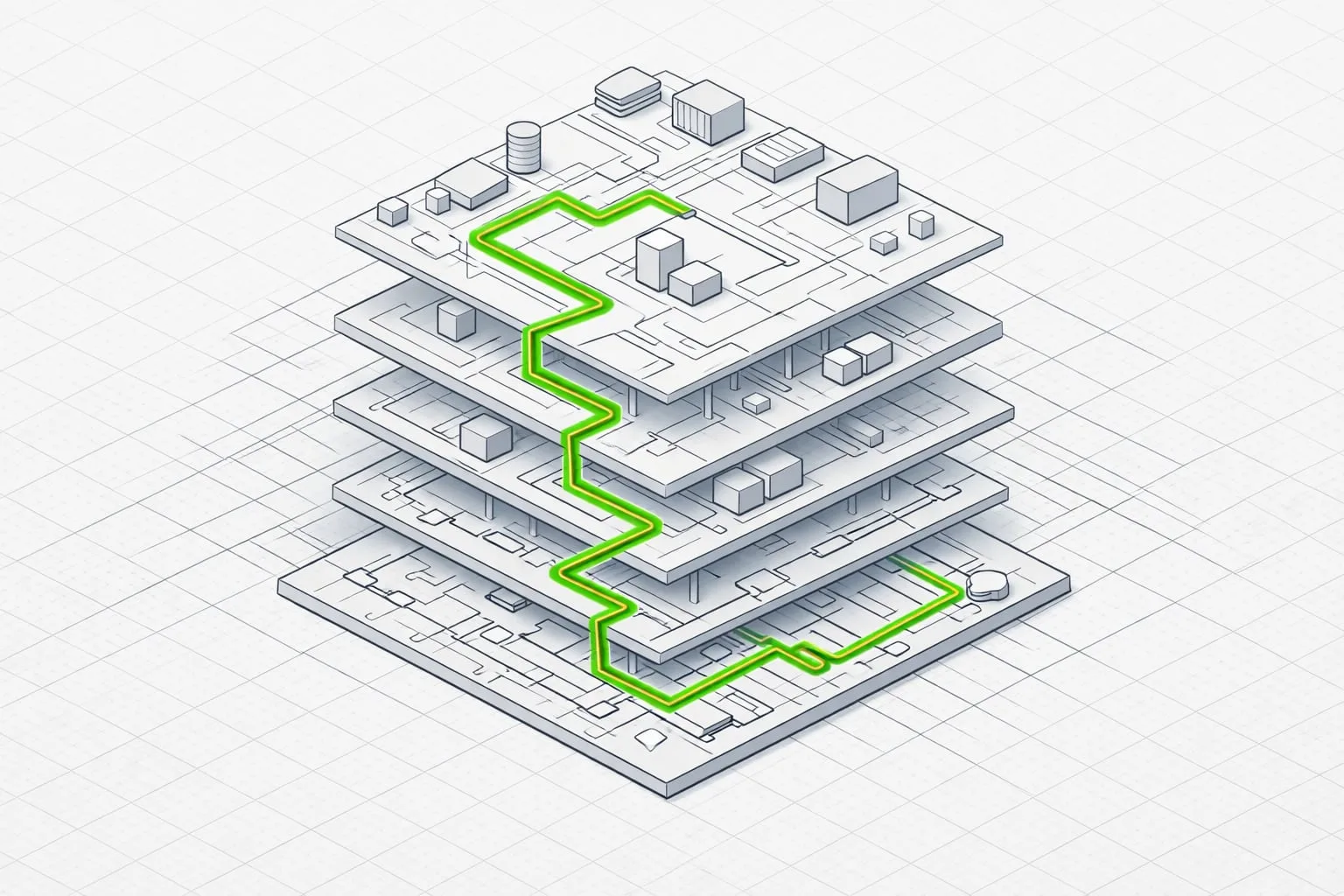
Why impedance checks belong early in PCB design
As data rates rise and edge speeds get faster, impedance control becomes a core design task rather than a final verification step. For high-frequency traces, even small changes in geometry, stack-up, or material properties can affect signal integrity.
The PCB-Investigator Impedance Calculator helps engineers calculate impedance and AC resistance quickly for selected traces. Based on the IPC-2151 standard, it delivers a fast and reliable method in just a few clicks.
What drives the result
Accurate impedance depends on the physical and electrical context of the trace. In practice, the key inputs are:
- Trace geometry – width, thickness, and overall conductor shape
- Layer structure – the board stack-up and reference plane setup
- Material properties – especially dielectric constant values
That combination makes a standard-based calculator valuable during development, when design changes are still cheap and easy to implement.
The earlier impedance is checked, the lower the risk of costly prototype rework later.
Built for high-speed and high-confidence design
This calculator is especially useful when you are working with high-frequency signals, tight stack-up constraints, or demanding PCB rules. It adds a practical verification step directly into the development workflow, helping you make better routing decisions with less guesswork.
If impedance is a critical part of your design process, take a closer look at PCB-Investigator. Try the calculator and see how quickly you can validate your traces.