Why impedance is a first-class design parameter
As signal speeds increase and transmission frequencies climb, PCB design becomes less forgiving. For high-speed traces, impedance is no longer something you check at the end; it has to be considered while the stackup, geometry, and materials are still being defined.
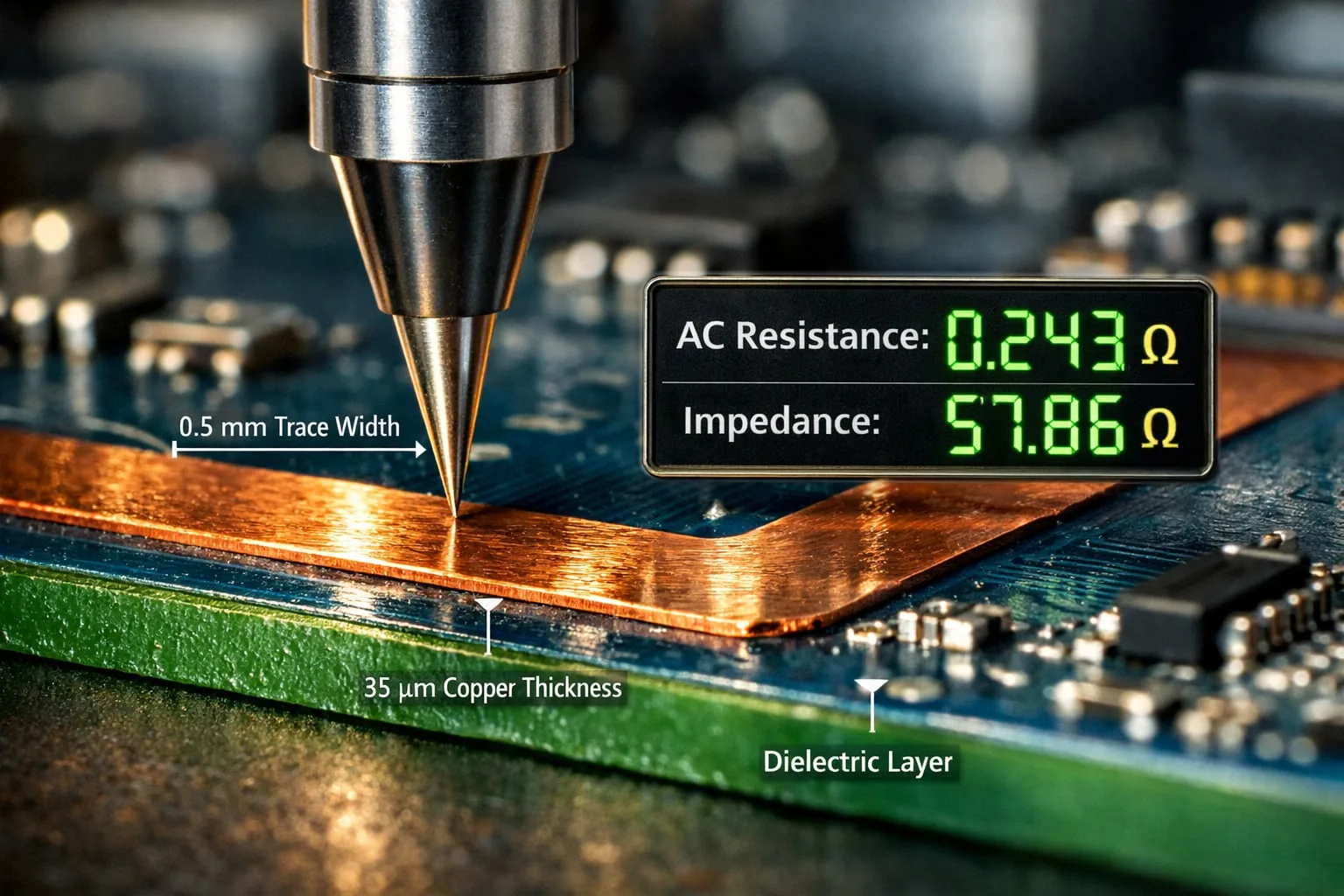
The PCB-Investigator Impedance Calculator is built for exactly that workflow. Based on the IPC-2151 standard, it helps engineers calculate impedance and AC resistance for selected traces in just a few clicks.
Practical support for real engineering decisions
Trace geometry, layer structure, and dielectric properties all influence the final result. That makes impedance calculation a critical step in high-frequency and high-speed designs, especially when design intent must stay aligned with manufacturable reality.
When performance depends on the trace, fast and reliable calculation is not optional.
With an integrated calculator, you can verify assumptions earlier, reduce manual effort, and support cleaner communication between design, development, and fabrication teams.
What engineers gain
- fast impedance and AC resistance calculation
- calculation method based on IPC-2151
- input factors such as trace geometry, layer stackup, and material
- useful for high-speed and high-frequency PCB work
- better support for reviews, validation, and early design decisions
If your designs push higher frequencies, tools like this help turn impedance from a manual estimate into a repeatable engineering step.
Learn more about the Impedance Calculator and evaluate how it fits your PCB workflow.