
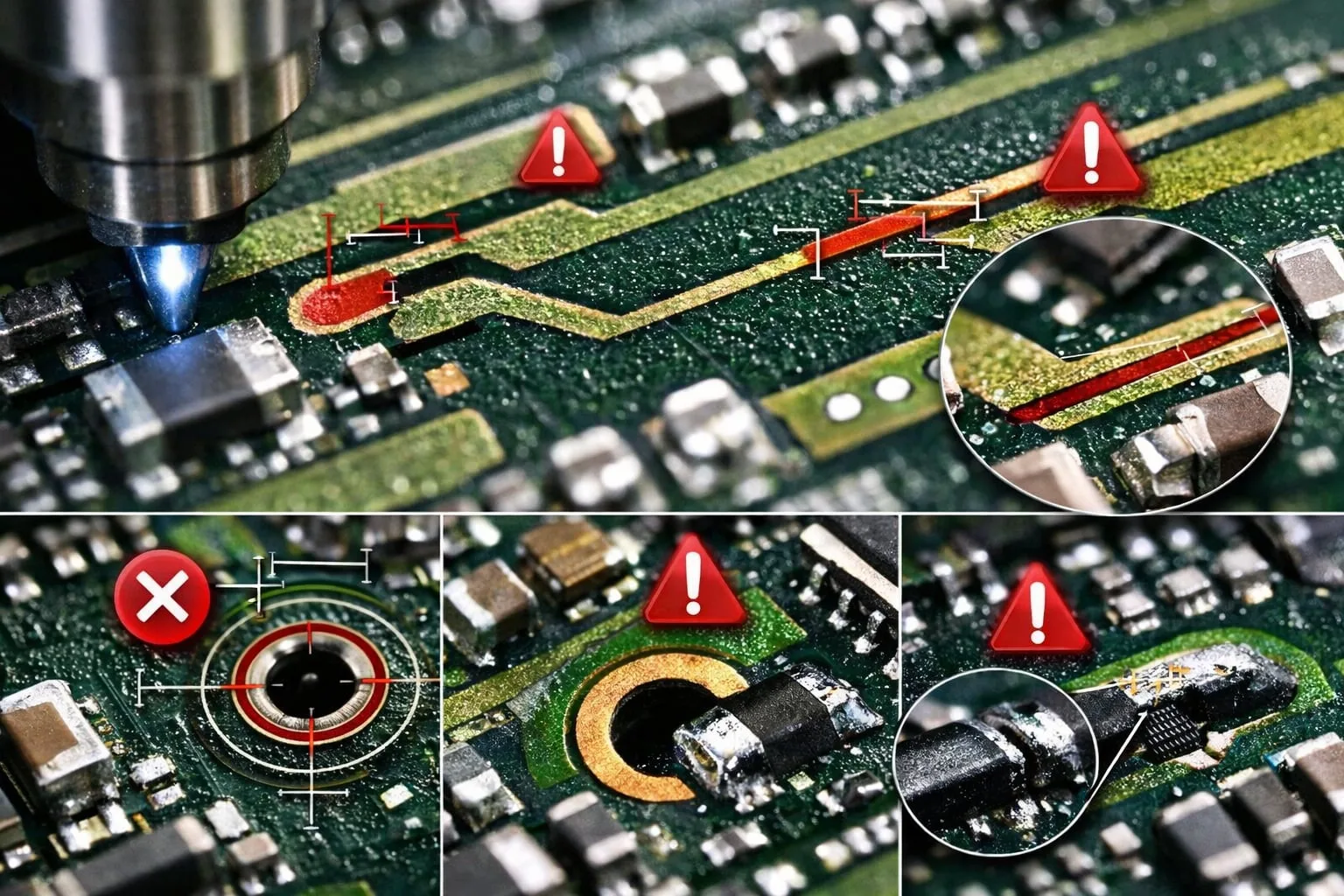
DRC analysis that catches fabrication problems early
In PCB design, the board may look perfect in CAD and still create costly questions in fabrication. That is exactly where the Design Rule Check (DRC) in PCB-Investigator adds value: it validates manufacturability before the design reaches the shop floor.
Running this check early helps engineering teams reduce avoidable iterations, lower production costs, and shorten time to market. A spacing violation, a risky drill feature, or an incomplete solder mask opening is much cheaper to fix before release than after supplier feedback.
What the bare-board analysis checks
PCB-Investigator DRC covers the practical rule areas that matter most in production, including:
- Copper spacing and trace width
- Annular rings for drills and copper pads
- Solder mask relief for drills, pads, and test points
- Clearance to non-plated holes
- Drill diameters, drill distances, missing or duplicate drills
- Exposed copper areas, blind traces, and potential opens or shorts
That makes the analysis a strong guardrail for bare-board validation before manufacturing release.
Flexible rule sets for real engineering workflows
One of the most useful parts of the workflow is the Rule File Manager. It allows teams to create, edit, import, export, and compare rule sets, so internal standards and supplier-specific requirements can be mapped directly into the DRC process.
Good DFM is not just about checking rules. It is about checking the right rules for the right manufacturing context.
The manual also defines key prerequisites for reliable checks, such as correct stack-up data, solder mask oversize, and proper pad or drill attributes. This keeps the analysis consistent and technically trustworthy for experienced users.
Why it matters
For PCB designers, fabrication engineers, and technical decision-makers, the benefit is straightforward: fewer surprises, fewer callbacks, and better control over release quality. The DRC helps bridge the gap between design intent and manufacturable reality.
If you want to validate PCB manufacturability earlier and more systematically, explore the Bare Board Analysis DRC in PCB-Investigator.