
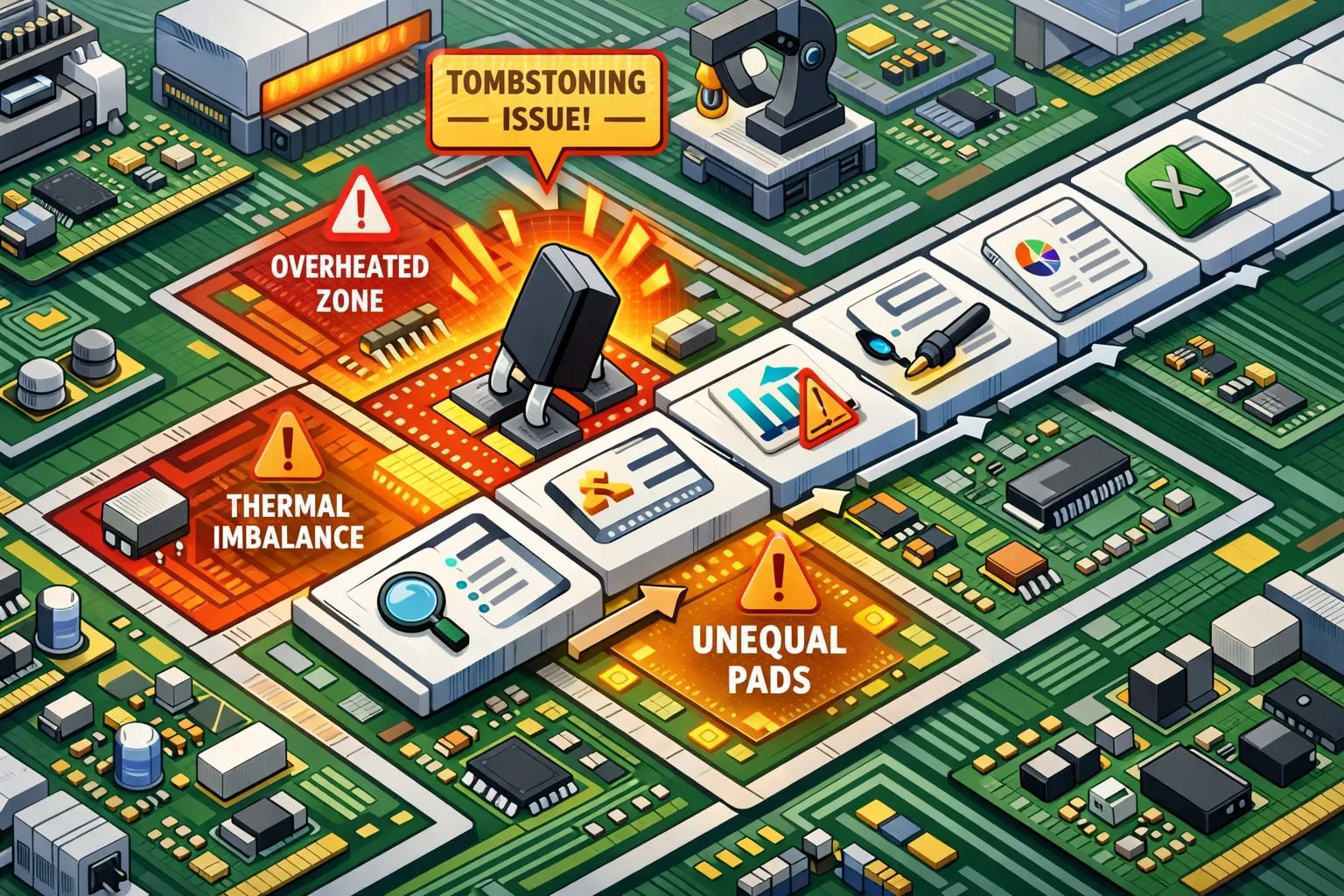
Catch tombstone risk before reflow does
Tombstone defects are a classic SMT manufacturing issue: a small component lifts on one end and stands upright after reflow, typically affecting resistors or capacitors. The root cause is often uneven heating or an imbalance in pad-to-pad conditions that makes the part rotate during soldering.
PCB-Investigator’s Tombstone DFM Analysis helps engineers detect those hazard areas early. Instead of waiting for build issues or yield losses to expose the problem, you get a structured pre-production check that highlights suspicious two-pin components and supports faster design-for-manufacturing decisions.
What the analysis provides
The plug-in identifies components with differences in pin connection behavior and presents them in a clear list, including both absolute and percentage differences. It also shows the mounting side and package name, which makes it easier to trace the issue back to the PCB layout and assembly context.
An overview diagram adds another practical layer by indicating the danger level based on heat dissipation differences. That gives layout and process engineers a quick way to prioritize where intervention is most needed.
- Detection of potential tombstone hazard areas
- Clear list of critical two-pin components
- Absolute and percentage difference data
- Mounting side and package information
- Export to Excel, CSV, TXT, and HTML from version 9 onward
Finding tombstone risk early can save time, reduce scrap, and prevent unnecessary rework in production.
If tombstoning is part of your DFM review checklist, this plug-in is worth a closer look. Try PCB-Investigator and see how quickly you can evaluate risky layouts before they reach the line.