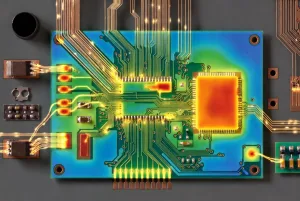

Impedance matters more than ever in high-speed PCB design
As signal rates increase and edge speeds get sharper, trace impedance becomes a critical design parameter. For high-frequency and high-speed circuits, routing alone is not enough anymore — geometry, stackup, and material properties all influence the final result.
That is why the PCB-Investigator Impedance Calculator is so useful. Based on the IPC-2151 standard, it helps you calculate impedance and AC resistance for selected traces quickly and with confidence. In just a few clicks, you get values you can use to support design decisions early in the process.
Why this workflow saves time
Engineering teams working on complex electronics need reliable data before issues show up in manufacturing or test. Small changes in trace width, spacing, dielectric constant, or layer structure can have a measurable impact on signal behavior. A fast impedance check helps reduce uncertainty and avoids unnecessary rework later.
In high-speed design, impedance control is not optional — it is part of the engineering discipline.
What you get
The calculator is built to support practical PCB analysis tasks, especially where speed and accuracy both matter:
- fast calculation of impedance and AC resistance
- results based on trace geometry, layer structure, and material
- calculation approach aligned with IPC-2151
- useful support for high-speed and RF-related designs
- better confidence when validating critical nets
Take the next step
If you want a more efficient way to check PCB impedance during development, this tool is worth a look. Try PCB-Investigator and see how quickly the Impedance Calculator fits into your analysis workflow.